
Performance, Identity, and Truth
Queen of HeartsThis flow explores the novel’s recurring contrast between performed identities and the less visible truths beneath celebrity, disguise, and social role.
increasing Bearing strength in each event
 decreasing
Bearing strength in each eventdecreasingClaire Performs a Duchess
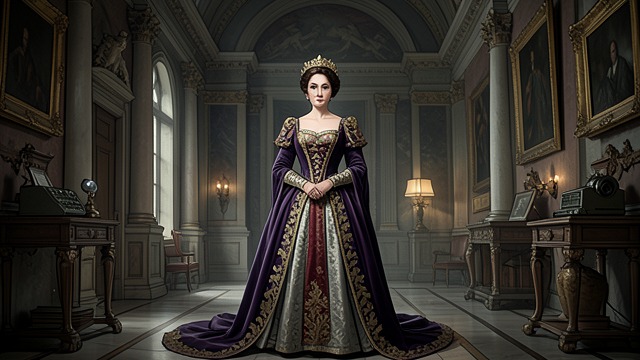
Claire Performs a Duchess
A title remembered
Claire is welcomed as a former duchess even though her life has moved through later marriages and identities. She knows how to use the old status when it benefits her.
Performance as survival
Her theatrical skill extends beyond the stage into social encounters. She can appear helpless, aristocratic, or glamorous according to what a situation requires.
The novel presents identity as partly inherited and partly deliberately acted.
The Screen’s Historical Fiction
The Screen’s Historical Fiction
History reshaped for romance
The proposed Tudor film invents a love rivalry between Mary Tudor, Elizabeth, and Philip of Spain. Claire recognizes the historical distortions, but Cy argues that entertainment matters more than accuracy.
Acting under a constructed story
Costumes, accents, and dialogue create a version of the past designed for audiences. The cast must perform roles that bear little relation to the people they depict.
The film’s artificiality echoes the social performances outside the studio.
Bella’s Stolen Identity
Bella’s Stolen Identity
A double constructed
Bella uses wigs, clothing, and a shared face to pass as Stella. Her success depends on a public that recognizes the star but rarely considers a second woman might exist.
Fame becomes camouflage
Stella’s celebrity gives Bella access and concealment at once. Bella’s personal history is hidden beneath the image she borrows.
The disguise plot turns celebrity into a practical instrument of both power and erasure.
Hollywood’s Private Masks
Hollywood’s Private Masks
Public roles persist off set
Craig’s screen image, Claire’s former-star persona, and Stella’s glamorous identity shape how others approach them. Their private motives are harder to see than their publicity.
Gossip controls exposure
Barbara Kindell watches for stories, and characters police what can be said about relationships and reputation. The possibility of a headline changes ordinary behavior.
Performance is not confined to acting; the public sphere demands it from nearly everyone.
Truth Through Observation
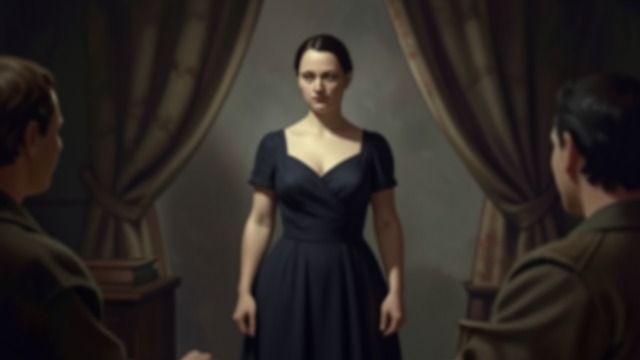
Truth Through Observation
Appearances fail
Stella’s apparent guilt, Bella’s borrowed identity, and Juan’s claim to be asleep all mislead the group. Georgiana tests each appearance against physical details and remembered movements.
A layered truth
The case resolves only when separate stories are distinguished: Bella attempts theft and frames Stella, while Juan kills Cy. A single public image cannot explain all the evidence.
The novel’s truth comes through attentive interpretation rather than surface certainty.
July 9, 1934, arriving at Kingsdowne Place
Late July 1934, at Golden Pictures studio
Before and during August 1934
August 1–3, 1934, in Hollywood
August 4, 1934, at the castle
